Go to content Go to navigation Go to search
Home | What We Do |Campaigns |Membership |About the Trust |Directions |Contact Us | Education

Core Strategy and LDF

LDF’s (Local Development Frameworks) comprise of various local planning policy documents including development plan documents and supplementary planning documents. For more information on the LDF for go to www.bathnes.gov.uk

CORE STRATEGY SPATIAL OPTIONS CONSULTATION 2009

For details of the Core Strategy and the supporting evidence base and information papers click here

Our key concerns are as follows:

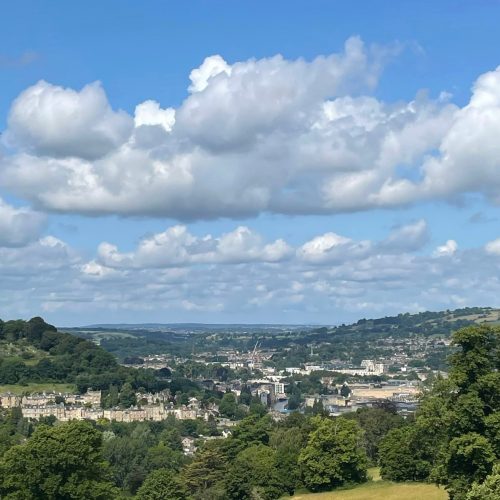
1. The two District-Wide Spatial Options fail to achieve the Council’s stated objective of regenerating brownfield sites ahead of greenfield development. Both of these options risk delivering the worst outcome for the District as a whole, with major new development taking place in the City ’s Green Belt while the River Corridor, the three MoD sites and other brownfield opportunities within the city remain blots on the landscape of the World Heritage Site. We therefore propose an alternative Option 3 which would drive the regeneration of brownfield sites across the District and particularly within Bath, and would increase employment and housing in Midsomer Norton and Radstock thereby reducing the excessively high levels of commuting from these towns. Under this option, no planning applications for an urban extension to the City of Bath would be considered before 2018 at the earliest, and then only if it has been clearly demonstrated that the need for growth cannot be satisfied on brownfield sites within the city boundary. Work on the options for an urban extension to Bath must cease, with the effort being transferred to developing clear visions for the MoD sites, the River Corridor and other brownfield locations within the city.

2. The Council’s preferred option for protecting the setting of the World Heritage Site fails to comply with the UNESCO operational guidelines on buffer zones, the UNESCO decision on July 2009 that the protection of the setting of Bath needs to be strengthened, and Planning Circular 07/09 on protection of World Heritage Sites. We therefore call on the Council to introduce an ‘intelligent’ buffer zone based on the landscape setting study which was published alongside the Core Strategy Options consultation document.

3. We recognise the importance of responding to the challenges posed by climate change. We are concerned that the Options document focuses too much on renewable energy generation and not enough on reduction of energy use and
conservation of energy. There is a pressing need to develop clear policies and guidance on the adaptation of existing buildings and on the acceptability (or not) of microgeneration installations within the WHS and its environs. The Trust is keen to work with the Council to develop these policies and guidance, drawing on the work done by English Heritage and other heritage organisations.

4. The River Corridor offers huge opportunities to help meet Bath’s need for sustainable new commercial and residential development. But we have yet to see evidence that the constraints, including in particular the flood risk issues, are fully understood. Confirmation must be obtained from the Environment Agency that the ambitions for the River Corridor are realistic before the Core Strategy is finalised, and mechanisms must be put in place to prevent premature development proposals coming forward for decision before the relevant planning policies are in place .

5. The Core Strategy needs to recognise the continuing importance of tourism to the economic and cultural vitality of Bath. Greater diversification of the economy is important, but should not be at the expense of our existing strength as an internationally renowned tourist and cultural destination.

6. The Council should clarify the status in planning terms of the Core Policies identified in the consultation document. The list of Core Policies is considerably more extensive than the Development Plan Documents and Supplementary Planning Documents set out in the current Local Development Scheme. Developers must be in no doubt that compliance with core policies such as the Historic Environment Policy and the World Heritage Site Management Plan is mandatory. Conflicts between the strategic objectives need to be resolved in a transparent and objective fashion by a weighted options appraisal where the weightings applied take account of the special characteristics of different parts of the district.

For details of the Trust’s response to the Regional Spatial Strategy please follow the South West RSS tab on the left side of this page.

2007 Core Strategy and Future for Bath Vision – Consultation Responses

The Trust has submitted its responses to the Councils Core Strategy consultation document and the Future for Bath Vision consultation.

For the Trust’s response to the Councils Core Strategy consultation document click here.

For the Trust’s response to the Future for Bath Vision consultation document click here.

For further information on B&NES council’s planning policies, including the Local Development Framework (LDF), the Core Strategy, and Supplementary Planning Documents go to www.bathnes.gov.uk.

The Future for Bath Vision document can be accessed via this link and also has its own website at www.bathnes.gov.uk/future/bath.

The LDF will include new and reviewed Supplementary Planning Documents (SPDs). The Trust is calling for new supplementary guidance in relation to the development of tall buildings.

Local Plan

Bath and North East Somerset Council adopted the local plan on the 18 October 2007. The policies contained within this document are now used for development control purposes. The full document can be viewed here

Inspector’s Report

The report on the Local Inquiry into objections to the Bath & North East Somerset Local Plan was published on 17th May 2006.
The Trust prepared a synopsis of the lengthy report which you can view as a PDF file by clicking here.

Joint Local Transport Plan 2006/07-2010/11

The final Plan and Supporting Documents for the greater Bristol area including Bath & North East Somerset were published in 2006. We have a copy in the Trust office at No. 1 Royal Crescent, and further information can be found at this link.